
Residential Solar
Turn your home into a power plant
Lower bills, bigger savings, total freedom.
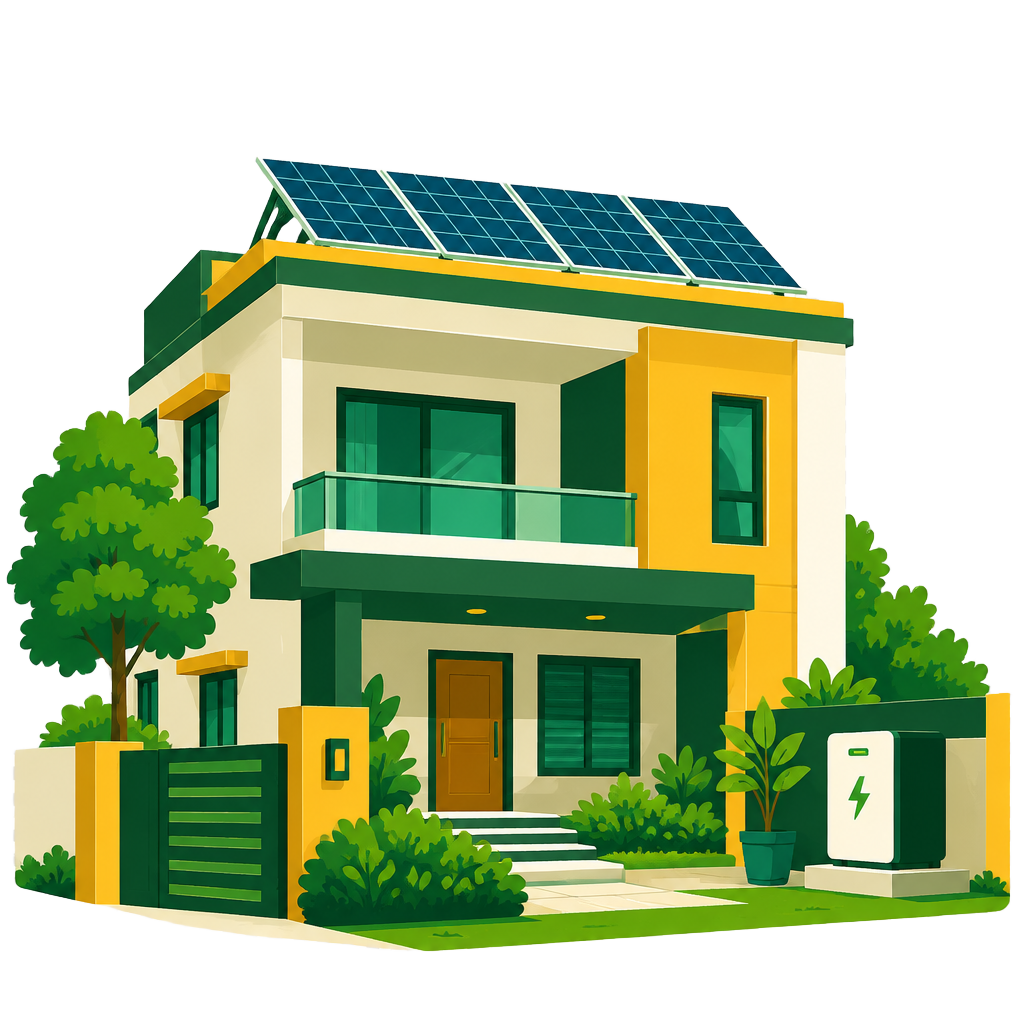
System Types
🔌
On-Grid
Grid-connected, most affordable, subsidy eligible. Surplus exports subject to utility rules.
🔋
Hybrid
Grid + battery. Backup for selected loads with compatible equipment.
🏝️
Off-Grid
No grid needed, fully battery-powered. Ideal for remote areas.
What you get with Akino
🛡️
Written equipment warranties
📱
Monitoring options
🧹
Maintenance & support
💳
Itemised quotation
Planning rooftop solar for your home
Start with consumption, not just your bill amount
Review the units (kWh) on your last 12 electricity bills. A bill in rupees includes fixed charges and taxes that solar may not remove. Air conditioning, water heating and seasonal use can change demand significantly. Share planned appliances too: a system designed around today’s use may not suit a future electric vehicle or extra air conditioner.
What a rooftop assessment checks
A usable roof is more than an empty terrace. The assessment considers structural condition, shade from neighbouring buildings and water tanks, drainage, access and safe maintenance space. The design also needs a suitable inverter location, cable routes, earthing and electrical protection. Complete any necessary roof repairs before installation rather than moving panels later.
Choose between savings and backup
On-grid solar offsets daytime use and can export surplus electricity once the utility approves the connection. Standard on-grid systems shut down in a power cut. A compatible hybrid system adds battery backup for selected circuits. Off-grid systems require separate planning for overnight demand and poor-weather days; they are not simply on-grid systems with a battery added.
Compare itemised quotations
Ask for module and inverter models, installed capacity, mounting structure, protection equipment, metering scope, installation charges and taxes. Product warranties and performance warranties are different. Confirm exclusions, cleaning responsibilities, service terms and payment milestones in writing. Keep the gross price separate from any expected subsidy so approval delays do not obscure the amount you must pay.
Evaluate savings realistically
Savings depend on roof shading, seasonal weather, system output, daytime use and your electricity provider’s billing rules. Identical capacities do not produce identical results on every roof. Compare annual estimates rather than the output of a particularly sunny day. A payback calculation should include maintenance, financing and likely equipment replacement costs, not only the installation price.
Common questions
Will my electricity bill become zero?
Not necessarily. Fixed charges, night-time imports and local billing rules can leave a balance even when solar covers much of your annual consumption.
Does every home receive a subsidy?
No. Assistance depends on the residential connection, compliant equipment, application process and government eligibility checks. Confirm eligibility before treating it as a discount.